The Best Flowers for Medical and Dental Waiting Rooms

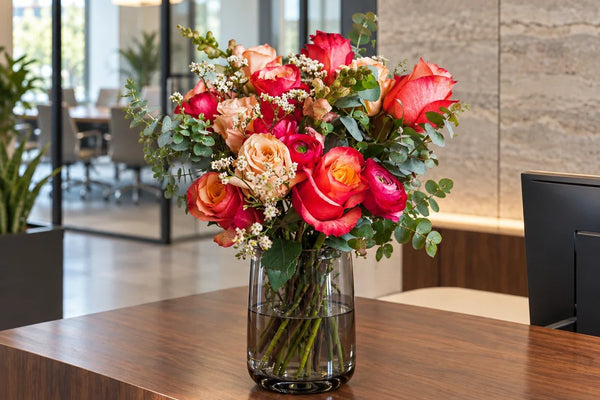
Quick answer: The best flowers for a medical or dental waiting room are unscented, low-pollen and long-lasting. Roses, lisianthus, alstroemeria, carnations and chrysanthemums are dependable choices, with greenery like eucalyptus to fill them out. Avoid lilies and other strongly fragranced flowers, place the arrangement where patients can see it but won't brush against it, and change the water every two days so it stays clean and fresh.
Flowers for waiting rooms compared
| Flower | Scent | Pollen | Typical vase life | Waiting-room fit |
|---|---|---|---|---|
| Roses | Light to none | Low | 5–10 days | Great |
| Lisianthus | None | Low | 7–10 days | Great |
| Alstroemeria | None | Low | 10–14 days | Great |
| Carnations | Light | Low | 10–14 days | Great |
| Chrysanthemums | Very light | Low | 10–14 days | Good |
| Eucalyptus and greenery | Fresh, light | None | 10–14+ days | Good; keep it as an accent |
| Sunflowers | None | Some | 6–10 days | Fine in larger, open rooms |
| Lilies | Strong | Heavy | 7–10 days | Avoid |
| Hyacinths, gardenias, tuberoses | Very strong | Varies | Varies | Avoid |
Vase-life ranges are typical figures and depend on how fresh the flowers are on arrival and how they're cared for.
Why scent and pollen matter more in a medical office
Patients in a waiting room may be feeling unwell, nervous, sensitive to smells, or managing allergies or asthma. A fragrance that seems pleasant in a home can feel overwhelming in a small, enclosed space where people sit for a while. Many medical, dental and wellness practices also ask staff to avoid strong perfumes, so it makes sense to hold flowers to the same standard. Unscented, low-pollen flowers bring color and warmth to the room without adding to anyone's discomfort.
Colors and styles that suit a waiting room
- Soft, light palettes such as whites, blush, peach and soft greens feel calm and clean, and suit most practice décor.
- Brighter mixes such as yellows, corals and sunflowers work well in pediatric, family and dental practices that want a cheerful, welcoming feel.
- A tidy, compact shape looks intentional in a clinical setting and is easier to keep neat between deliveries.
Where to put flowers in a medical or dental office
- On a side table or console in the waiting area, where patients can see the arrangement from their seats.
- At the end of the check-in counter, not in the middle, so it doesn't get in the way of paperwork, card readers or conversations through a window.
- Out of walkways and away from where children play, on a stable surface in a weighted vase that won't tip.
- In public areas only. Many facilities restrict fresh flowers and potted plants in clinical or treatment areas, so check your own infection-control policy before placing them anywhere patients are treated.
How to keep waiting-room flowers clean and fresh
- Change the water every two days and rinse the vase each time. Clean water keeps the arrangement fresher and prevents cloudy water and odor.
- Recut the stems by about half an inch every few days.
- Remove fading flowers and dropped petals daily, so the arrangement always looks cared for.
- Keep flowers away from heat vents, sunny windows and equipment that runs warm.
- Assign it to someone. Adding "flowers" to the opening or closing checklist takes about two minutes a day.
What size arrangement does a waiting room need?
| Space | Suggested size | ReVased plan |
|---|---|---|
| Check-in counter or small waiting area | About 19–32 stems | Reception, $85 per delivery |
| Main waiting room table | About 33–50 stems | Lobby, $99 per delivery |
| Large lobby in a multi-provider practice | 60–80 stems | Statement, $149 per delivery |
Practices with more than one location, or more than one arrangement per delivery, get volume pricing: 5% off for 2–3 and 10% off for 4 or more. For a full breakdown of monthly and yearly costs, see how much an office flower subscription costs.
How often should a practice refresh its flowers?
Arrangements typically look their best for one to two weeks. Weekly delivery keeps a busy waiting room looking fresh every day. Every other week works well for most practices and costs half as much. Monthly is the most budget-friendly, with a gap between when one arrangement fades and the next arrives. For more on choosing long-lasting stems, see the best flowers for an office lobby or reception desk.
See flower plans for medical, dental and wellness practices.
Frequently asked questions
Are fresh flowers allowed in medical offices?
In most waiting rooms, yes. Some facilities restrict fresh flowers and plants in clinical or treatment areas, so check your practice's infection-control policy for anywhere beyond public spaces.
What flowers are best for patients with allergies?
Choose low-pollen, unscented flowers such as roses, lisianthus, alstroemeria and carnations, and avoid lilies and heavily fragranced blooms.
Are flowers or plants better for a waiting room?
Both can work. Fresh flowers change with every delivery and add more color, while plants need less frequent replacement. Some facilities limit potted plants because of the soil, so check your policy.
How do you stop vase water from smelling?
Change the water every two days, rinse the vase, and remove any leaves that sit below the waterline.
Can a dental office have flowers at the front desk?
Yes. Keep the arrangement at the end of the counter, choose unscented flowers, and use a weighted vase so it stays put in a busy check-in area.
Keep Reading